
Prep Perch
A Clean & Compact Utensil Holder
Human Factors Designer - Individual Project
Completed: September 2024
Project Length: 2 weeks
Project Brief: Use the Wood Shop to create a prototype that improves the flow of the space, in one of the following locations, by streamlining a specific experience.
Hospital room
Entryway of an apartment
Kitchen
Classroom
-
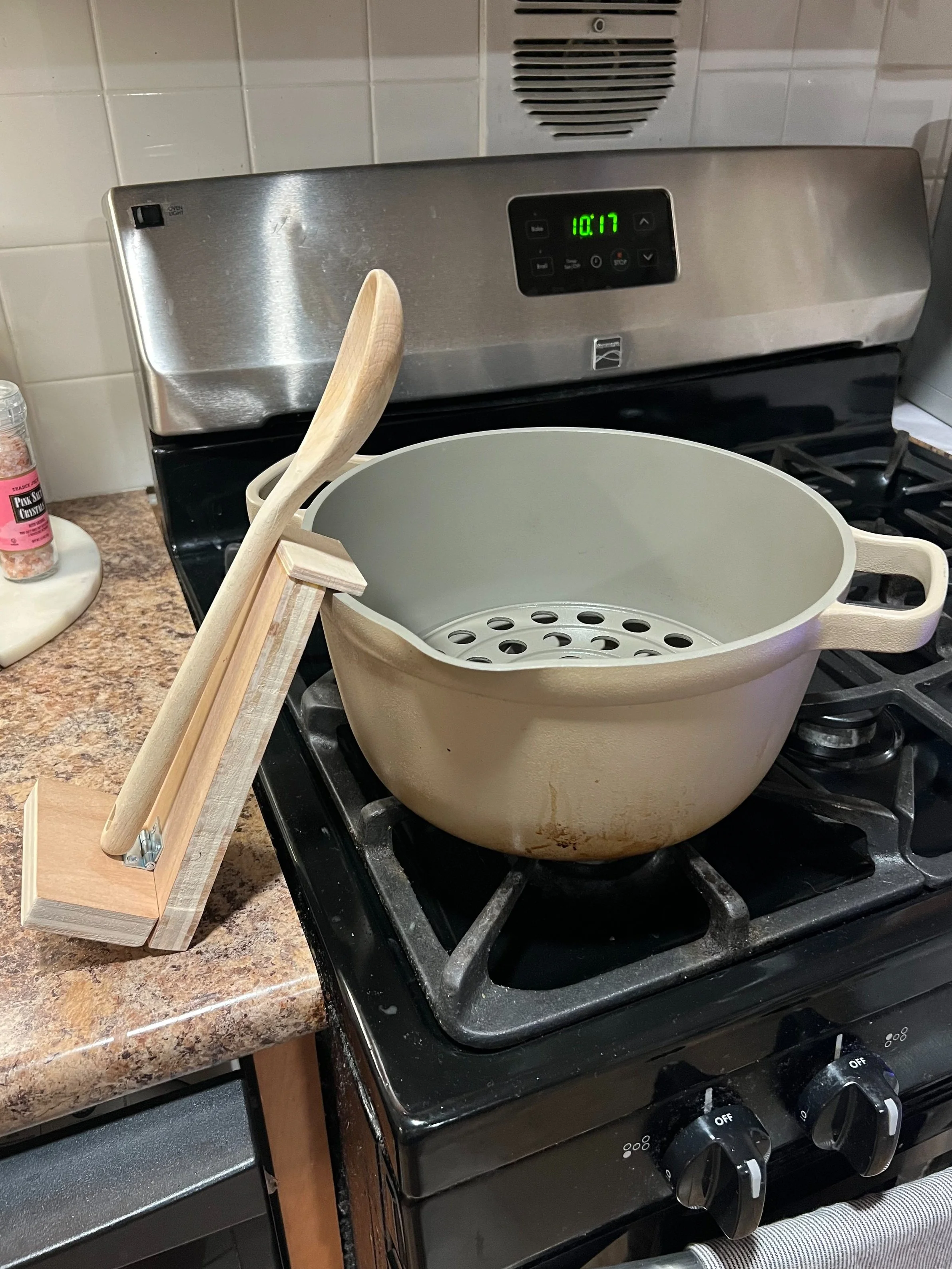
Traditional spoon rest options fall short in functionality:
They can contaminate utensils by allowing direct contact with potentially unsanitary surfaces.
They pose increased risks for those with food allergies, especially living in shared spaces.
Balancing utensils on pot edges often ends in tipping accidents, spills, and messes.
-
Research & Ideation:
I explored several concepts but often overcomplicated the design. Reminding myself to "work smarter, not harder," I focused on creating a streamlined, functional product that didn’t sacrifice usability for aesthetics.Prototyping:
The initial prototype emphasized simplicity, but user testing revealed new considerations:Utensil security when cooking with lids.
Ways to minimize utensil slippage.
Improvements Made:
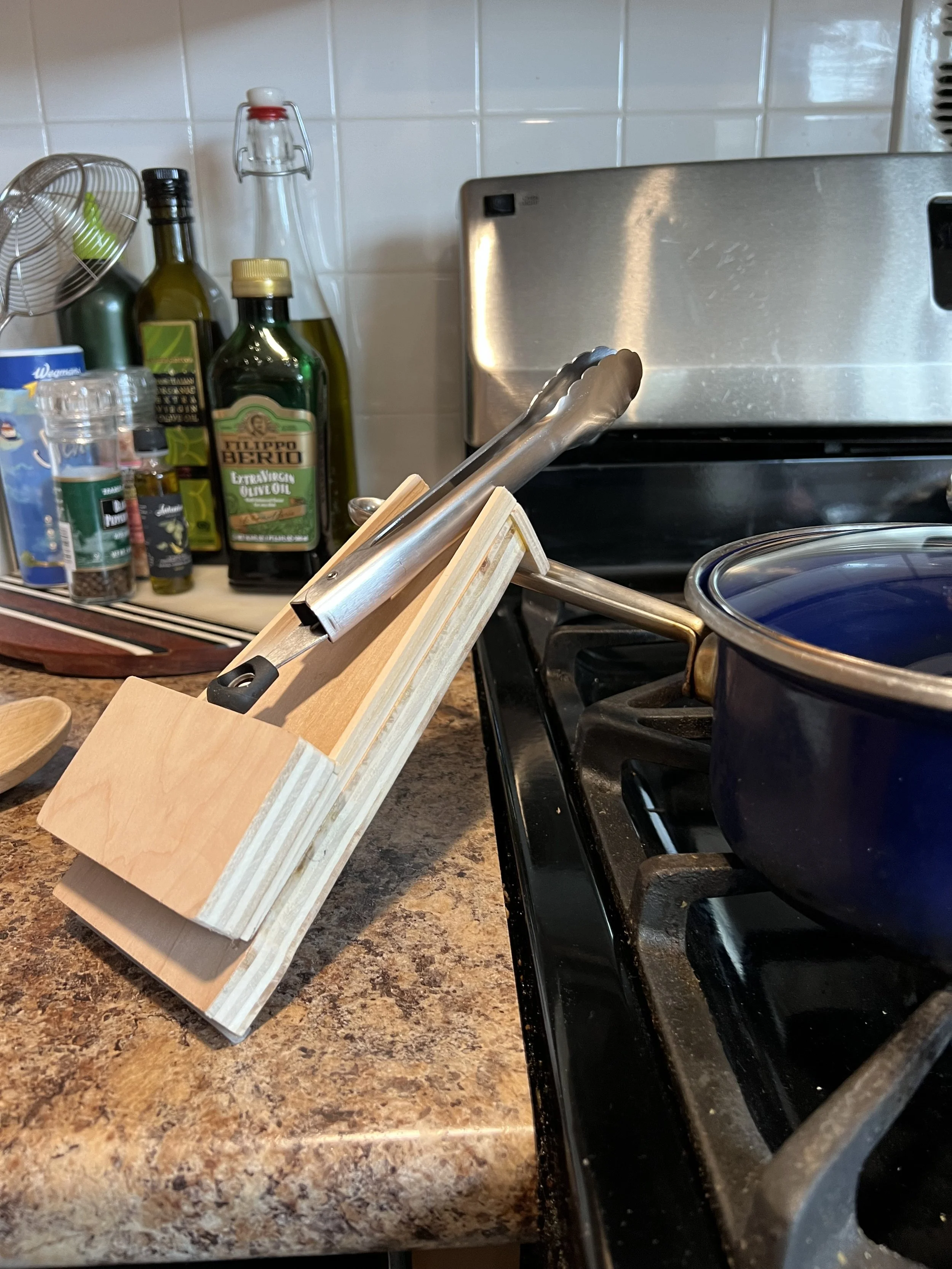
Added rubber bumper for traction on counter contact.
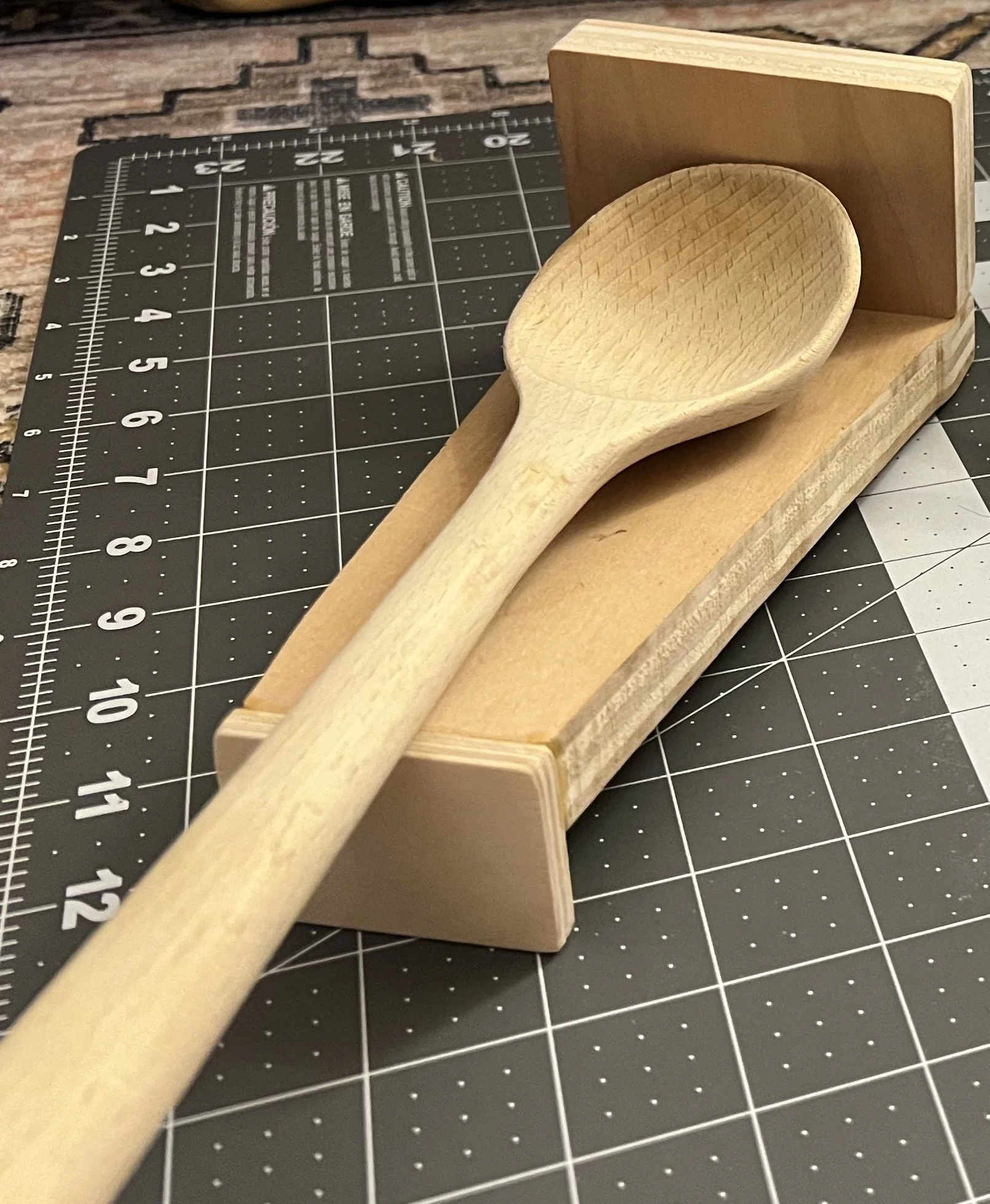
Walled edges for stability.
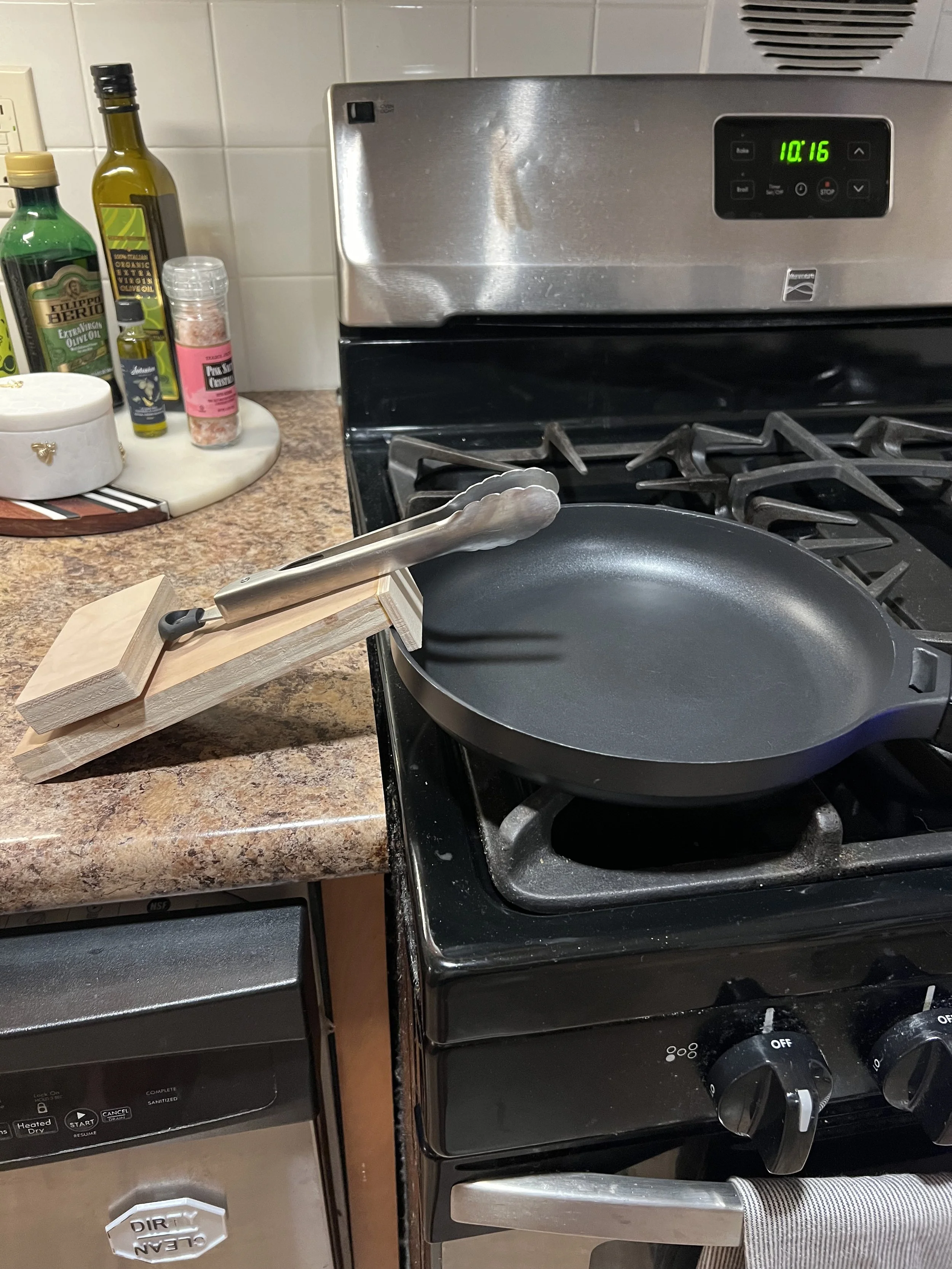
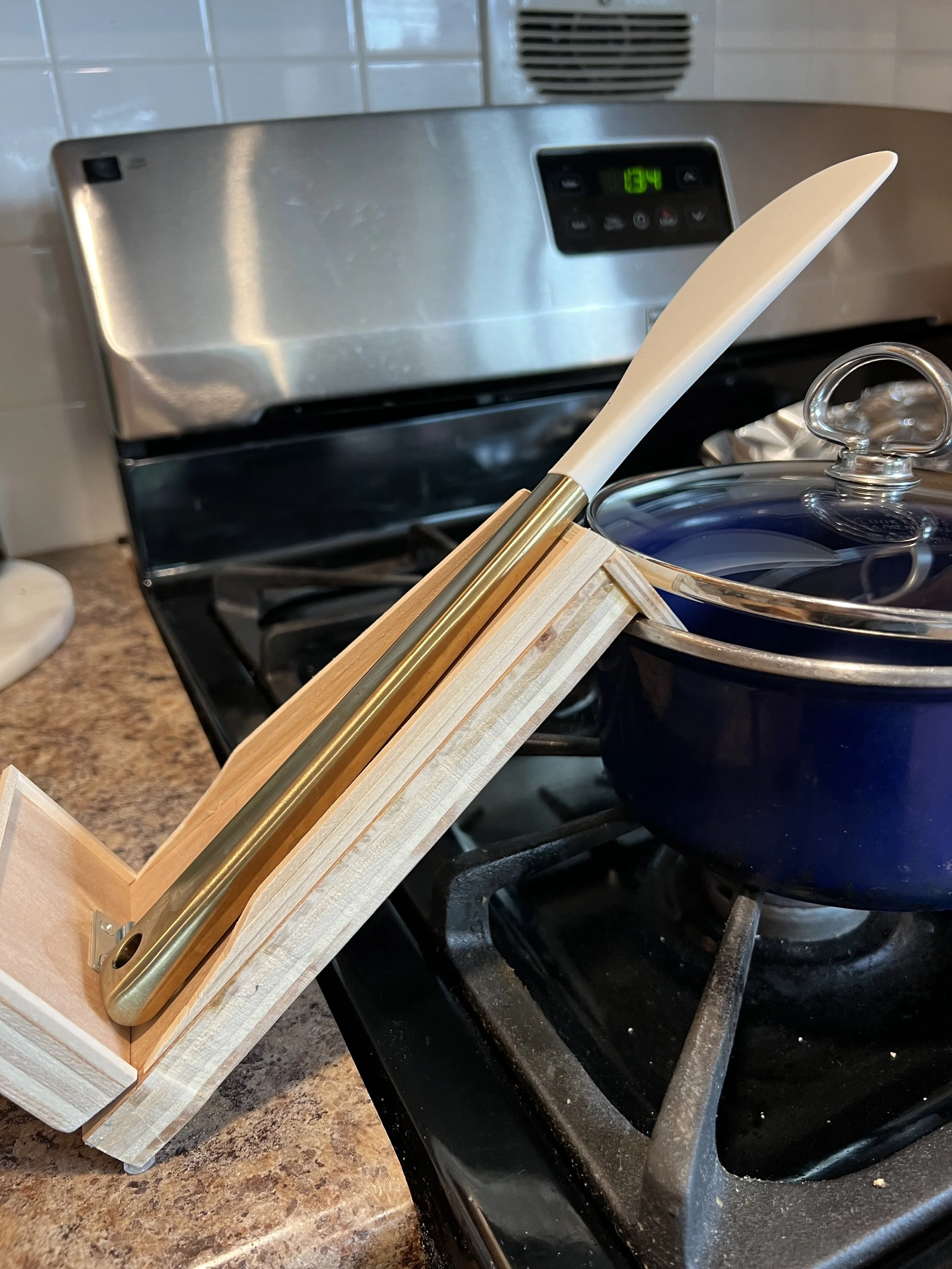
Discovered new uses to support closed lids while maintaining ventilation.
-
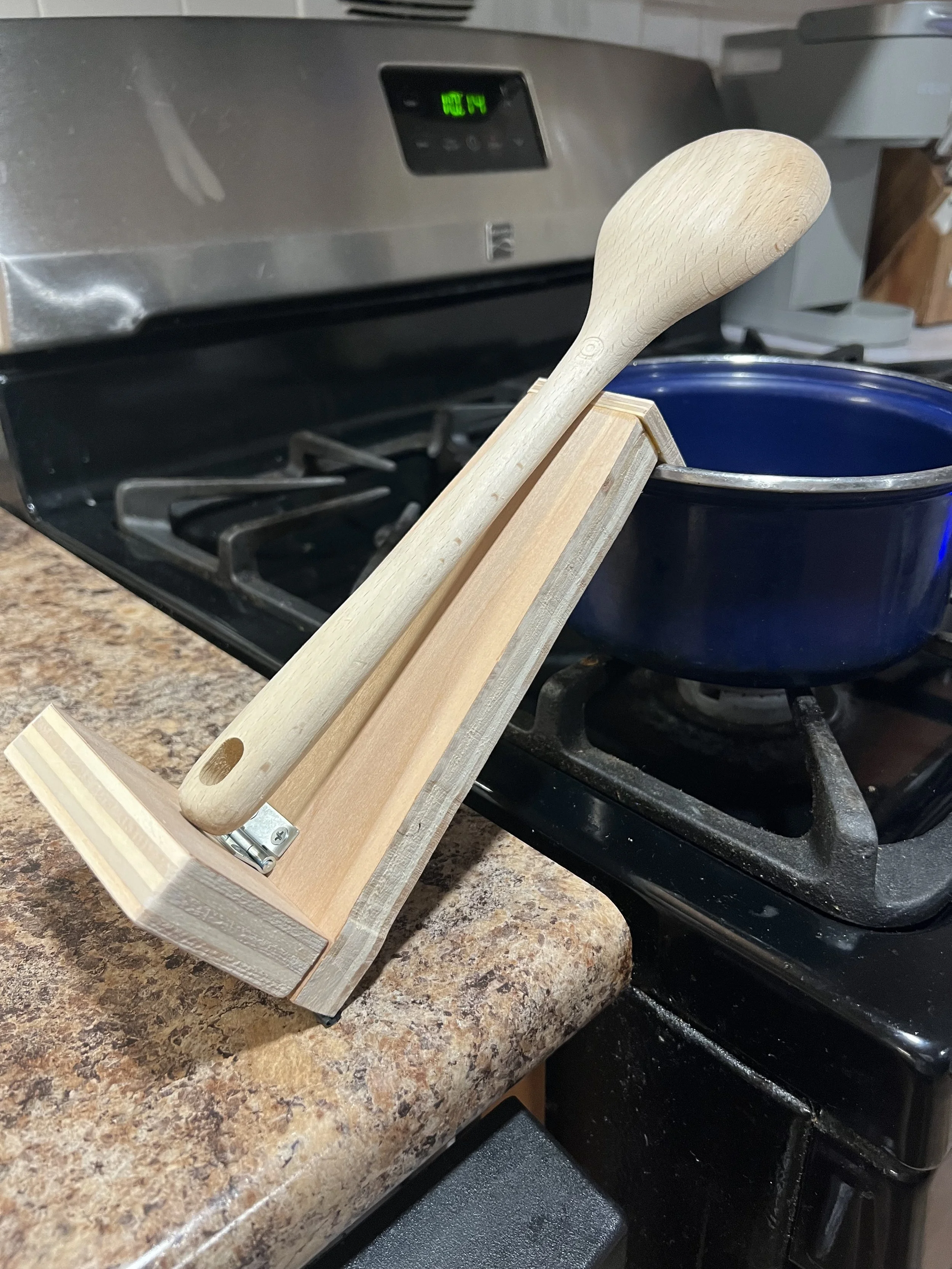
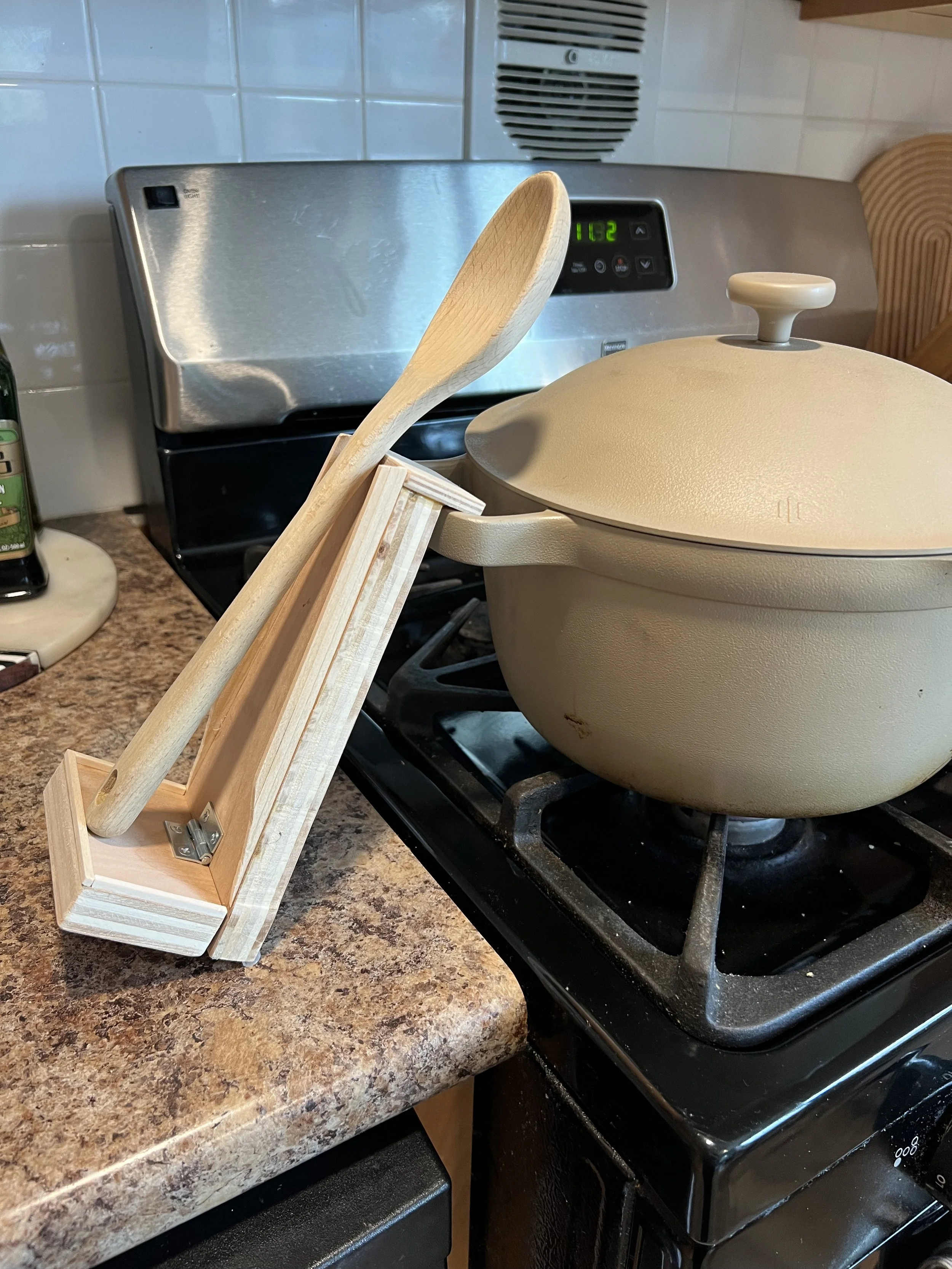
A compact, angular wood caddy designed to keep your cooking tools suspended above your pots and pans, preventing mess and contamination. Composed of three key components:
Sturdy base: Weighted for stability.
Sloped support: Accommodates a variety of utensils.
Secure ledge: Small wooden hook to attach to the cooking vessel.
The Prep Perch’s foldable design ensures adaptability for different kitchen setups and easy storage when not in use.
Feedback & Reflection
User Testing & Feedback
Core functionality: Users found the design intuitive for suspending utensils above pots and pans, effectively preventing mess and contamination
Lid compatibility: Initial testing revealed the design hadn't accounted for cooking with lids on, prompting a redesign of the securing ledge to also support closed lids while maintaining ventilation
Suggested improvements: Engraved signifiers to indicate utensil placement, a feature to catch food residue, and a protective coating for easier cleaning
Reflection
I began the process with countless construction ideas that never progressed beyond the conceptual stage. I found myself complicating the design unnecessarily until I reminded myself to work smarter, not harder. So many kitchen gadgets go unused or get discarded because they’re too bulky and take up valuable space. Traditional spoon rests, while compact, often lack practicality. At that point why not just use another plate as you’re already dirtying something else.
Anecdotally, kitchens can attract critters that might enter your home. My own kitchen has seen unwelcome guests, like mice, making their way across counters in search of crumbs. With this in mind, I knew my prototype needed to offer a better solution than standard spoon rests, all while maintaining a sleek and hygienic design.
Feedback was imperative for identifying pain points I hadn’t considered. For instance, I typically don’t cook with a lid, so I had not thought about how that may affect usability. This insight also prompted further testing, leading to the discovery of additional functionality.