
TimeOut
Effortless Timing
Interaction & Human Factors Designer
Completed: November 2024
Project Length: 2 weeks
Project Brief: Gather ambient or active (or both) data from one of the following locations to design an experience that heightens awareness of time and/or space.
Hospital room
Entryway of an apartment
Kitchen
Classroom
-
Traditional timers often require manual interaction to stop their alarm—a hassle when your hands are busy or dirty while cooking. Key pain points:
Having to locate the timer or device to turn off the alarm.
Alarms that continue buzzing while you’re occupied.
-
Designing the Circuitry:
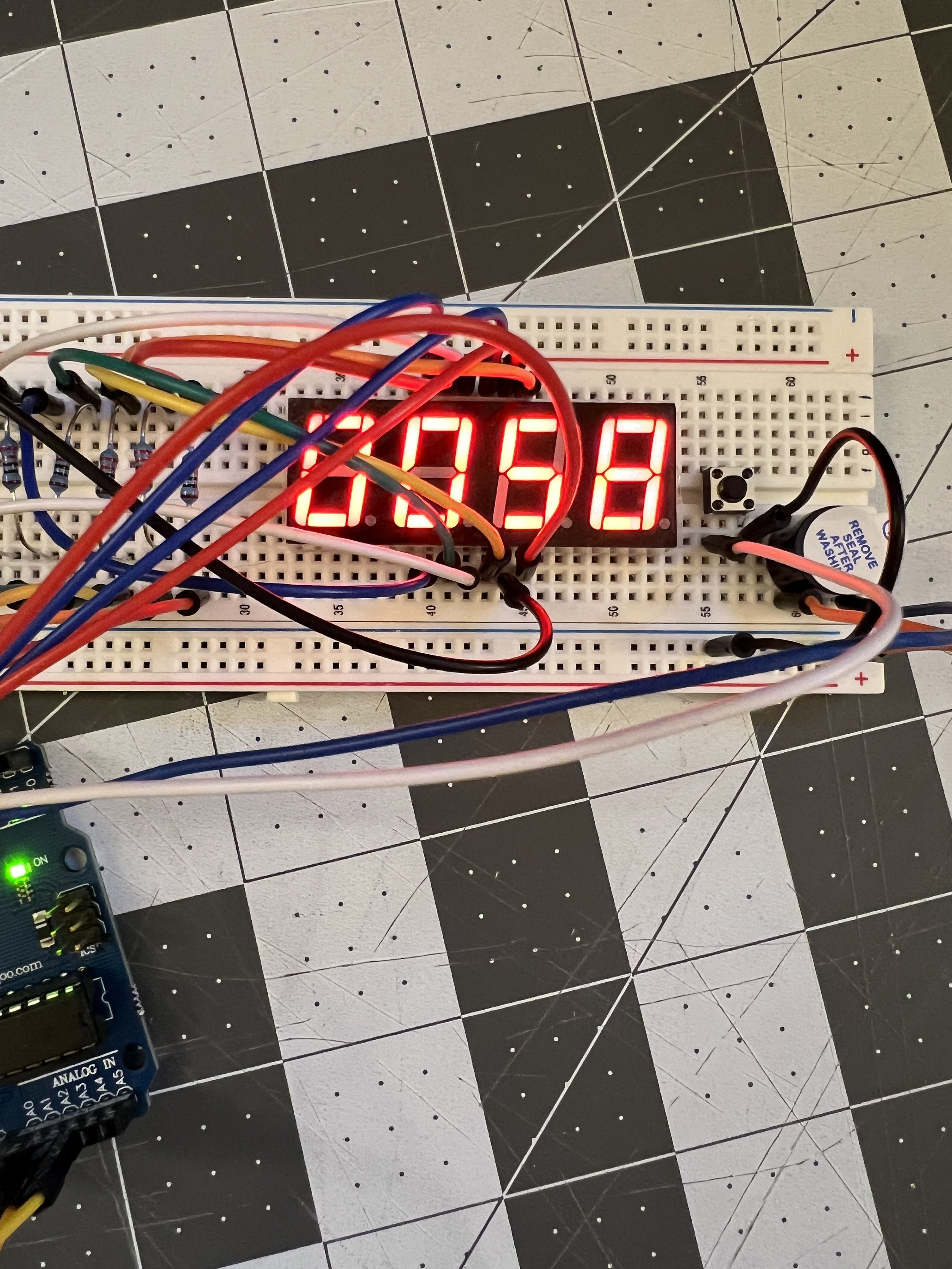
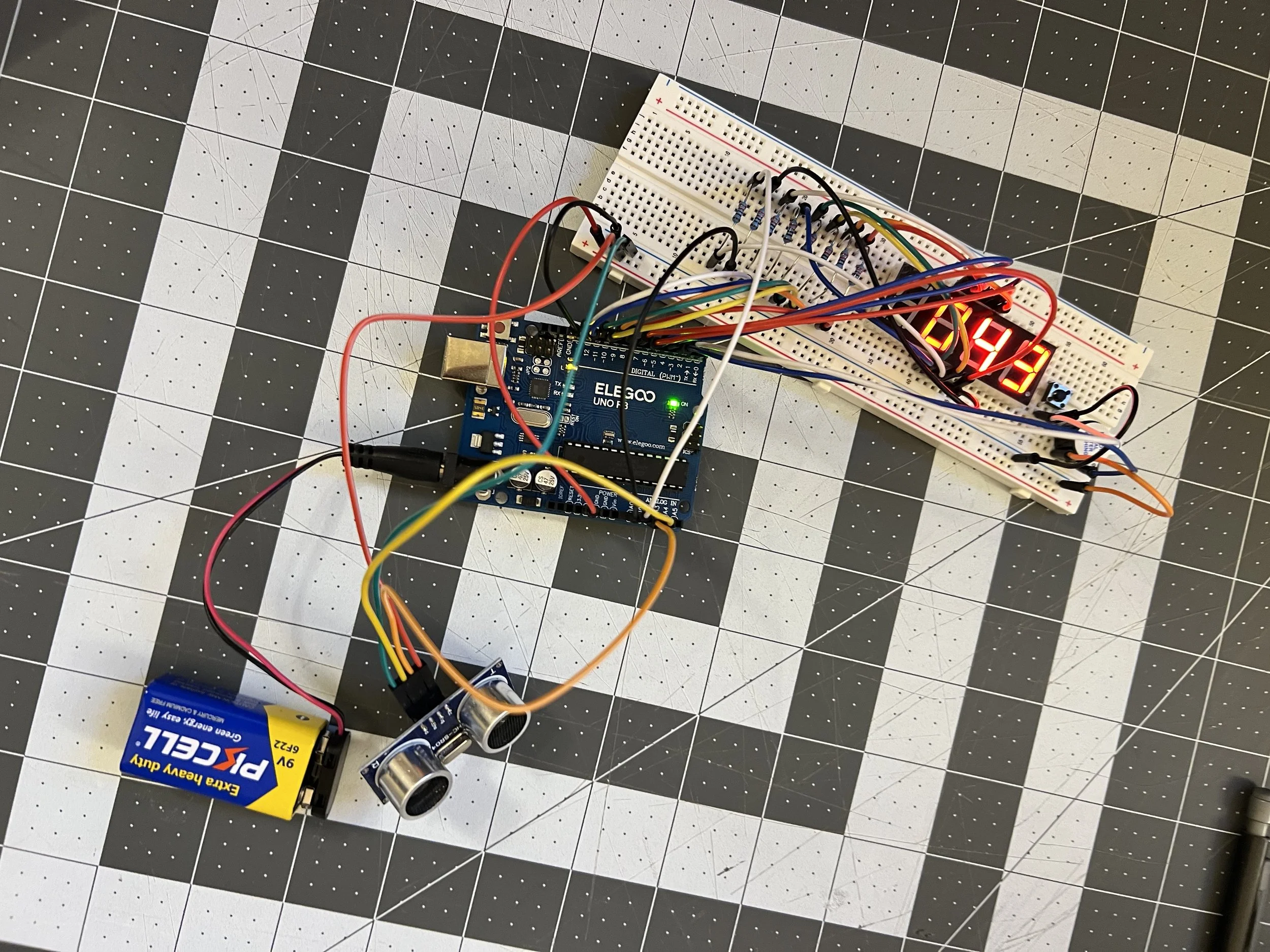
Initial attempts used an LCD screen, but challenges led to switching to a 4-digit 7-segment display for a simpler, effective solution.
Integrated an ultrasonic sensor for hands-free interaction, testing multiple configurations to ensure reliable detection.
Prototyping the Enclosure:
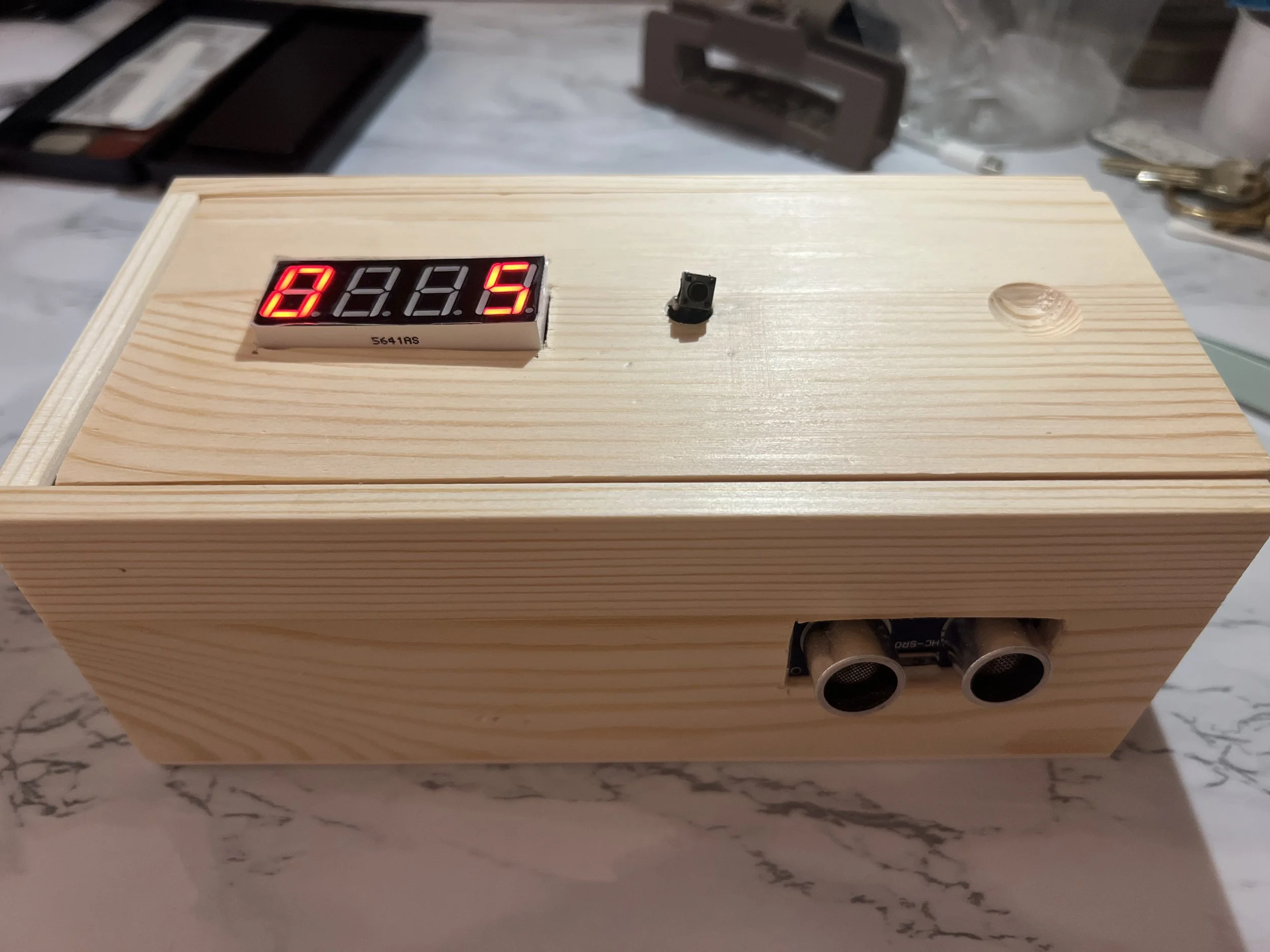
Opted for a sliding-top box for its sleek design but found it impractical for frequent adjustments. Future iterations could use a hinged lid for better accessibility.
-
A sleek, interactive timer that combines functionality and convenience:
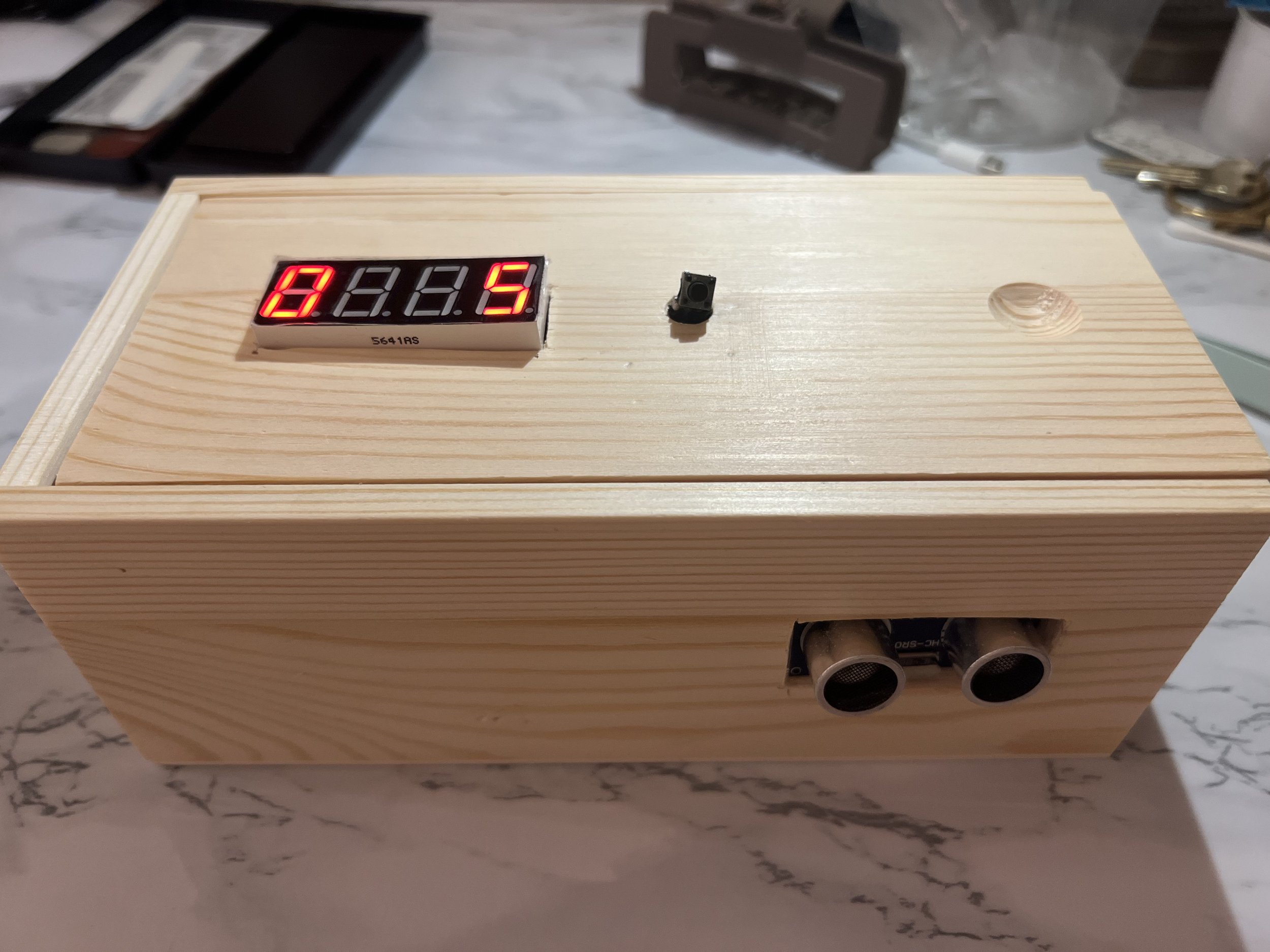
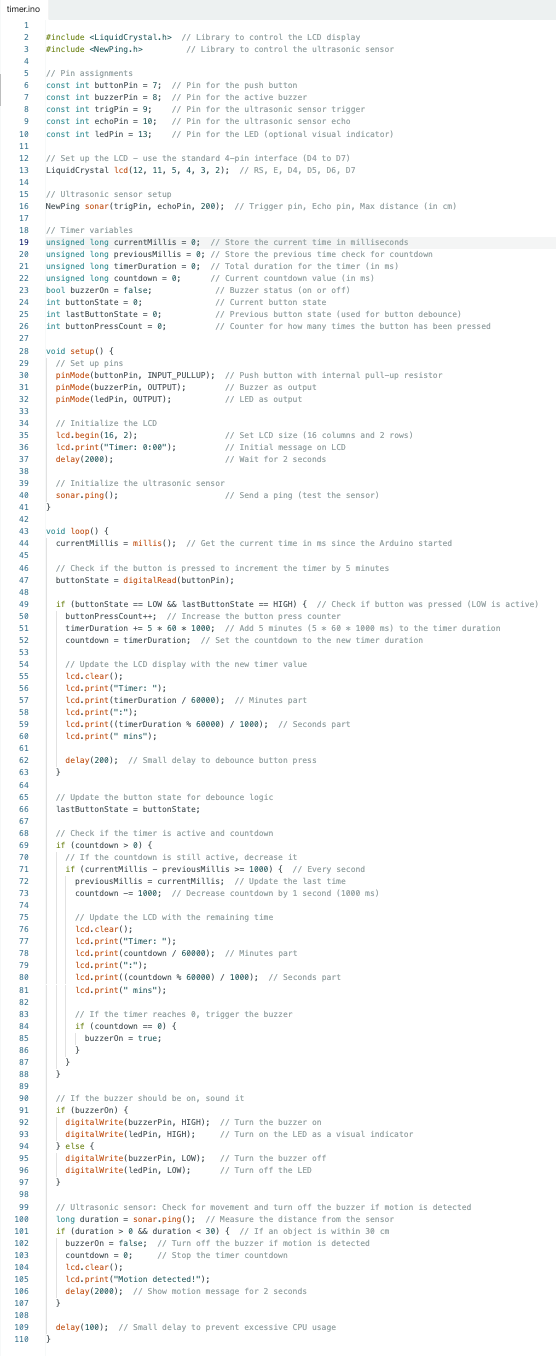
4-Digit Seven Segment Countdown Display: Easily tracks cooking times, uses a push button to set the time in increments.
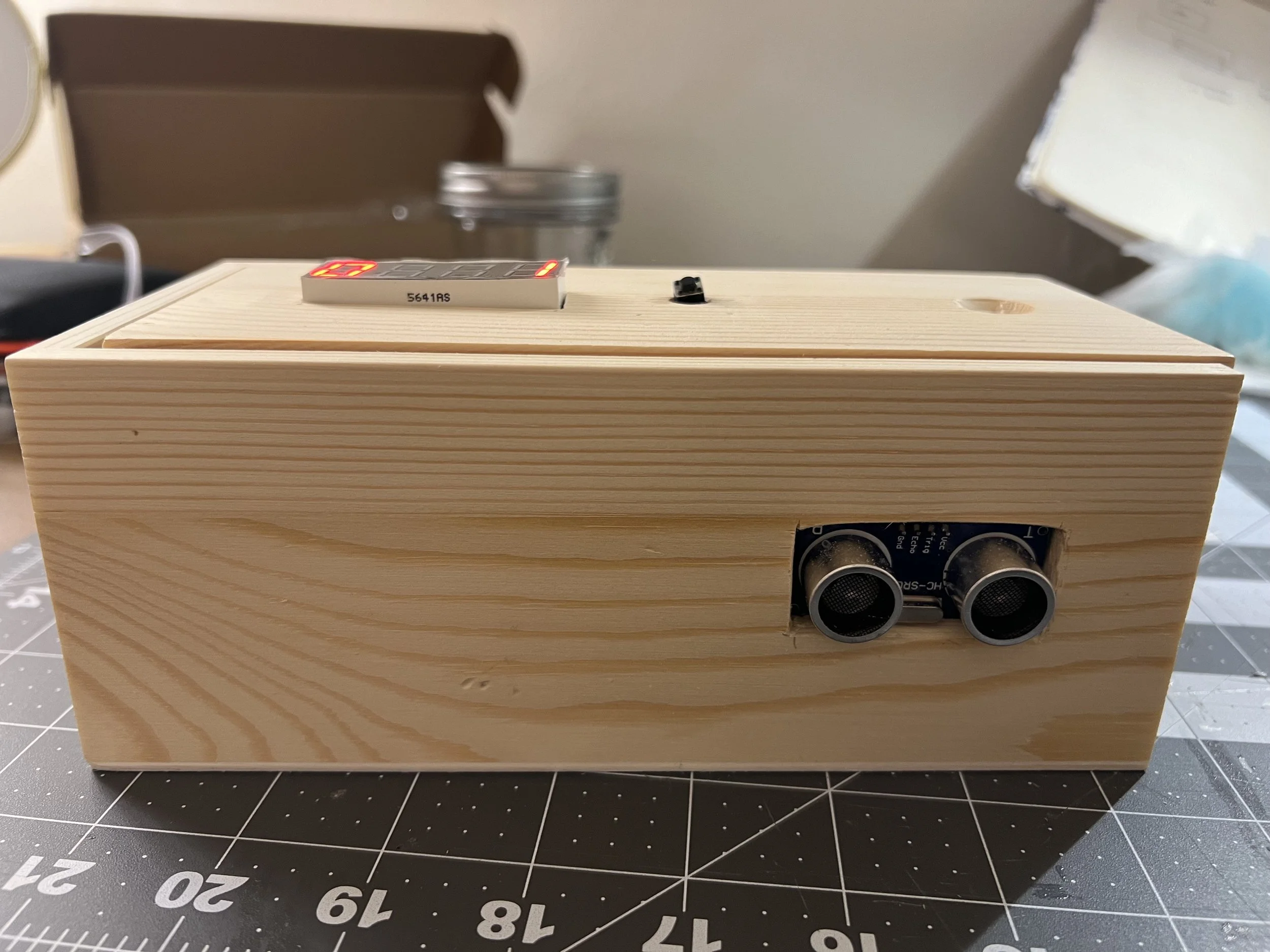
Ultrasonic Sensor: Turns off the buzzer when someone approaches within six feet, eliminating the need for manual interaction. If someone is already within 6 feet, the timer only buzzes once.
Compact Enclosure: A prototype box with a sliding lid to hide wiring and keep the design neat.
Feedback & Reflection
User Testing & Feedback
Hands-free operation: The ultrasonic sensor reliably silenced the alarm without manual interaction — a clear win for busy or messy kitchen scenarios
Known limitation: The final build functioned as a working implementation prototype but not yet a fully refined final form
Suggested improvements: Experiment with alternative sensors (motion or wave) for more flexible detection, and downsize the enclosure for better space efficiency
Reflection
This project presented several challenges, and I encountered a number of roadblocks along the way. Initially, I had the idea to build a kitchen timer using pieces of the arduino I had not yet tinkered with, then adding in the ultrasonic sensor or motion sensor to detect a presence. The initial task of building the timer on it’s own turned out more complicated than I anticipated. At first I was experimenting with the LCD screen but after days of trial and error I could not get it to work right and switched to the 4 digit 7 segment display. After switching, I tinkered for a while with the shift register and ran into more roadblocks before realizing that the shift register wasn’t even necessary. That was when I made the most progress in getting a final prototype circuit.The final prototype ended up being an implementation prototype but not yet in its final form.
After the long process of devising a working circuit, I incorporated minimal soldering in order to design and make a decent enclosure. I decided on a sliding top box as I thought, in actual use, it would be the most sleek for hiding it’s mess. While the top does excludes hinges, I found the aesthetic appeal did not outweigh the burden of getting the circuit enclosed with the necessary features still on display. A simpler hinged lid would lessen the aggravation for set-up and battery purposes.