
Third Spaces
Designing connection through shared spaces.
Human Factors Designer
Graduate Team Project
Completed: May 2026
Project Length: 3 months
Project Brief: Third Spaces, a research-driven mobile application that helps young adults build meaningful friendships after college by connecting users through shared interests and local activities. Working as part of a four-person graduate team, we translated user research into a high-fidelity prototype focused on reducing barriers to meeting new people.
-
Many young adults struggle to build new friendships after graduation despite wanting stronger social connections. Existing platforms often prioritize dating, large social events, or networking, creating friction for users seeking authentic, low-pressure ways to meet people. Our challenge was to design an experience that made forming friendships feel approachable, comfortable, and sustainable.
-
Research & Ideation
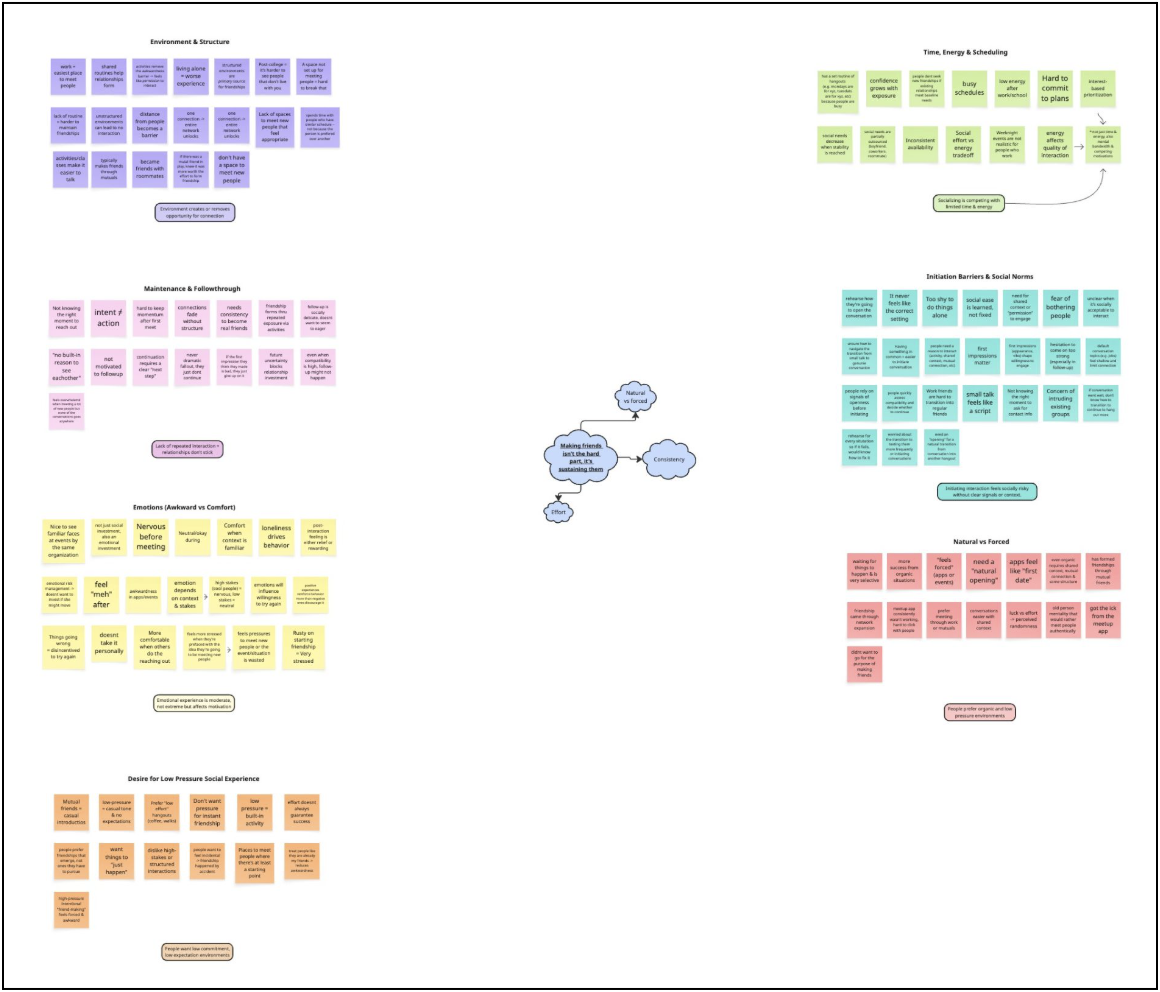
We conducted qualitative interviews, competitive analysis, and literature review to better understand how friendships develop after college and the barriers users experience when meeting new people. Research findings informed personas, journey maps, design requirements, and early concepts that explored different approaches to encouraging meaningful social interaction.
Prototyping
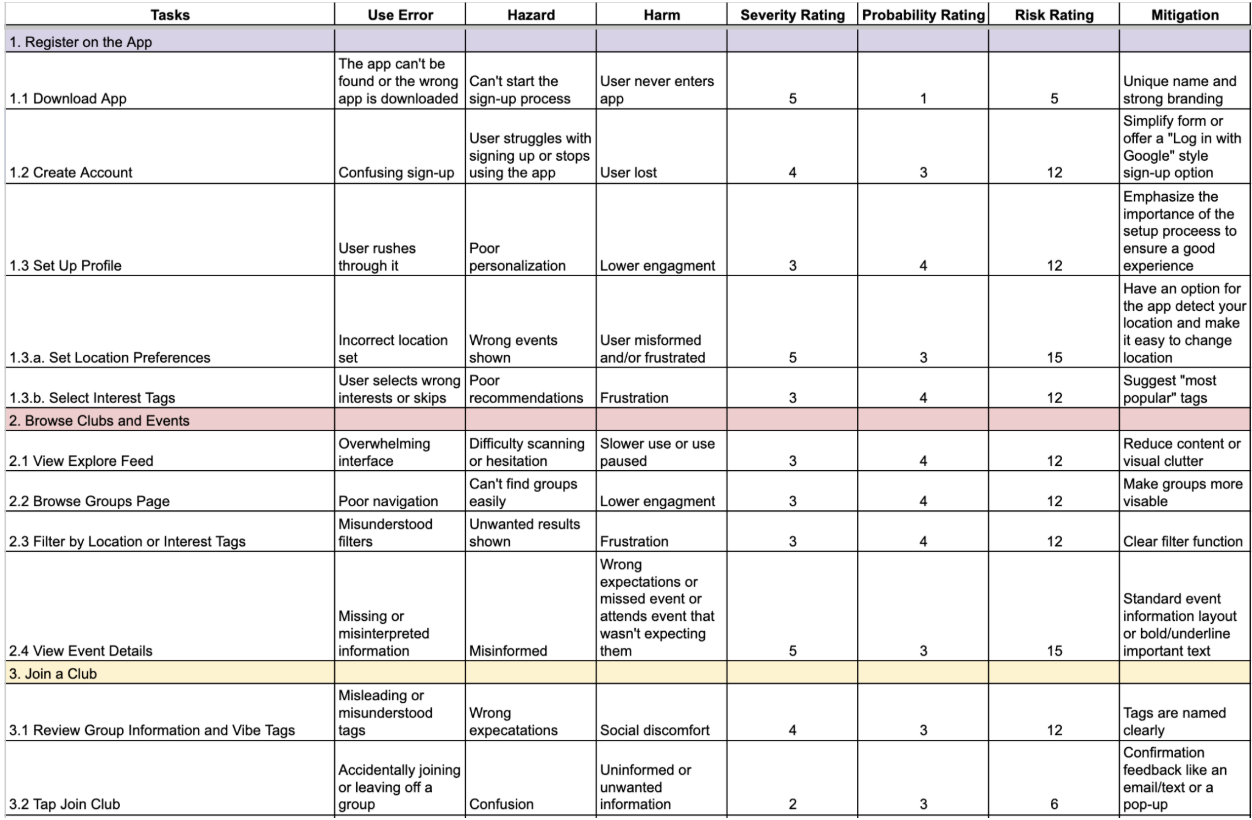
Our team translated research insights into a clickable mobile prototype, iteratively refining navigation, onboarding, event discovery, and social features through heuristic evaluation, risk analysis, and formative usability testing. Feedback guided multiple rounds of design improvements before finalizing the prototype.
Improvements Made
Based on usability testing and user feedback, we refined navigation, clarified information architecture, improved onboarding, simplified task flows, and adjusted interface elements to better support discoverability, confidence, and long-term engagement.
-
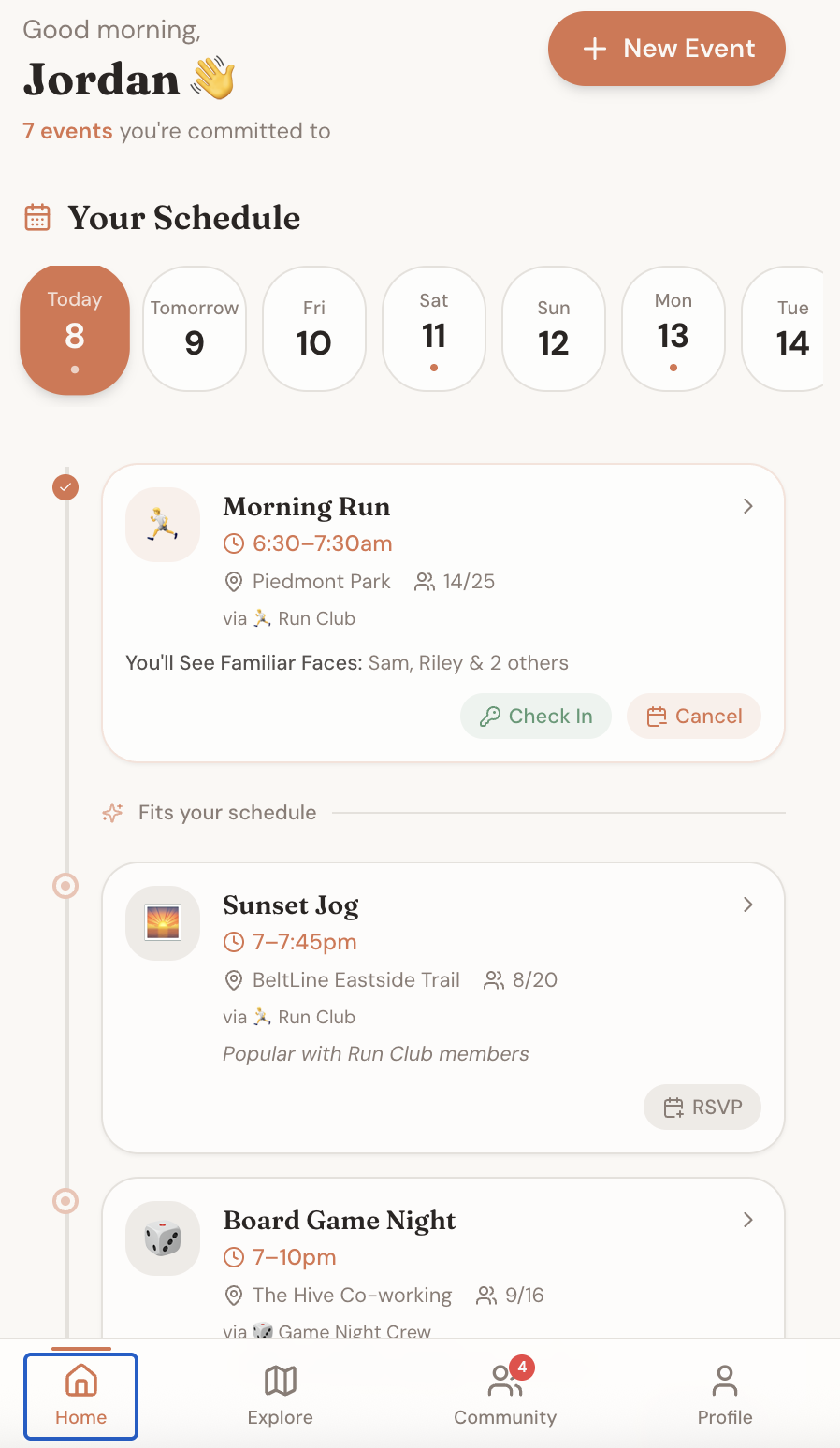
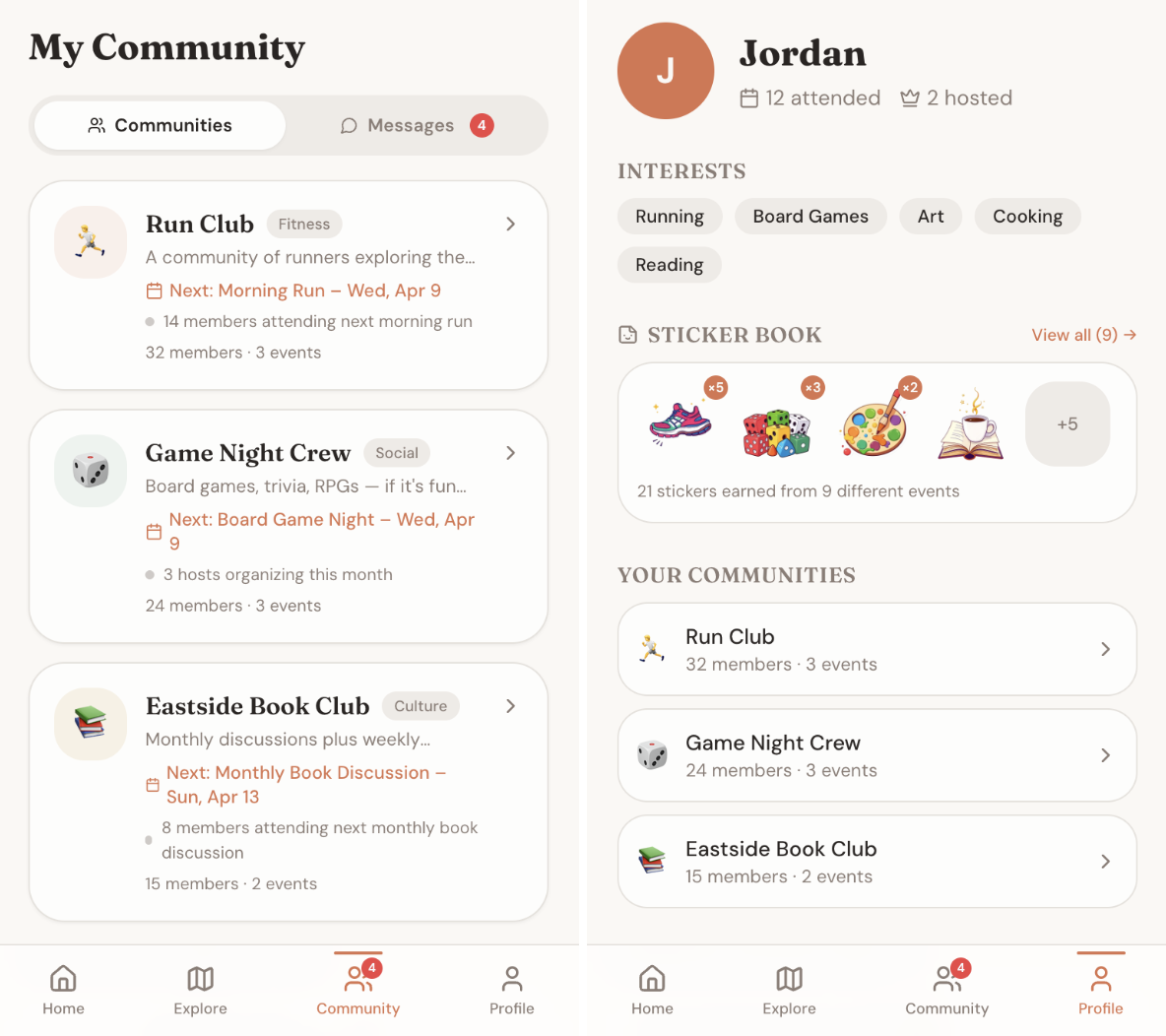
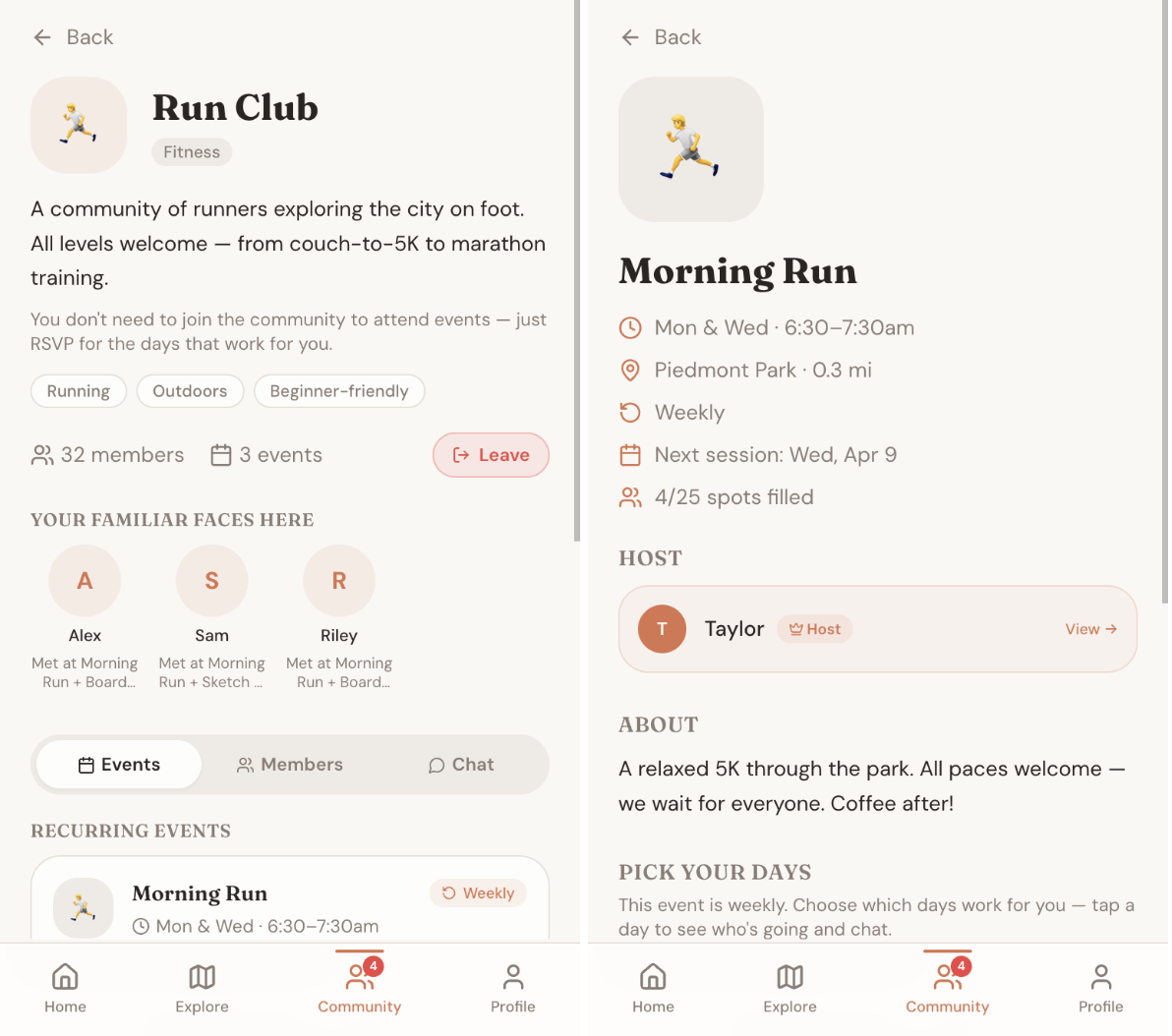
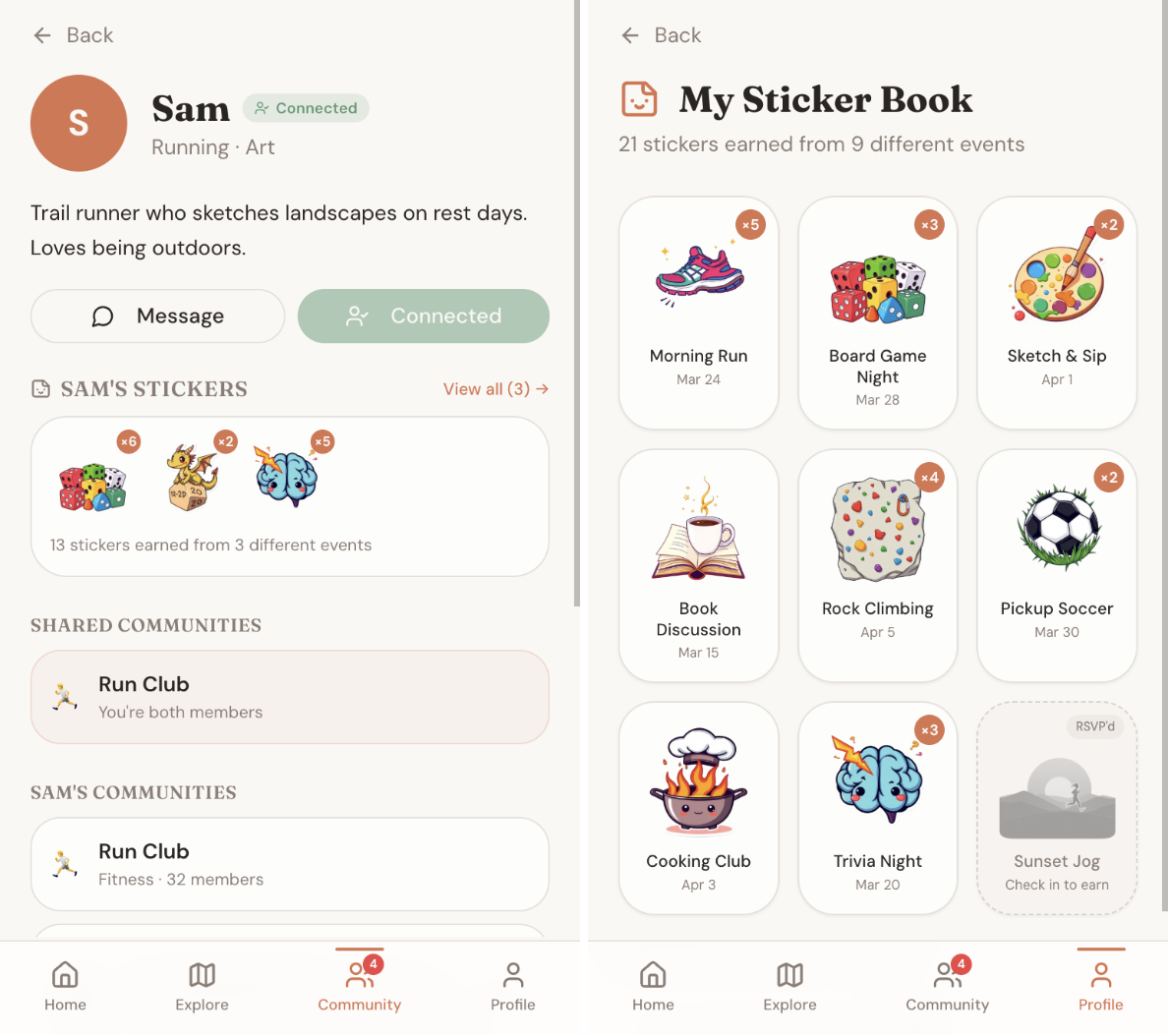
Third Spaces is a mobile application that helps recent graduates discover local activities and connect with people through shared interests. Rather than matching users based solely on profiles, the platform encourages friendships to develop naturally through community events, recurring groups, and interest-based experiences, reducing the anxiety often associated with meeting new people.
Deliverables
Feedback & Reflection
User Testing & Feedback
Hosting punch card: Participants could locate and read their hosting progress, but expected the card to also show which events they'd hosted, not just the count
Event check-in (PIN code): All participants completed check-in, but several interpreted the PIN as a security measure rather than an attendance confirmation, and expected to enter it right after RSVPing rather than at the event itself
Event creation: Participants could complete the flow, but noted the manual date/time text fields made it harder to confirm they'd entered the correct information
Navigation and labeling: Most navigation felt intuitive and consistent with familiar app patterns, though one participant expected "My Community" to center on people rather than groups and events
Follow-up refinements: Based on these findings, we recommended a QR-code-based check-in scanned by the host (clarifying both timing and purpose), an event history log alongside the punch card, and a native date/time picker to replace manual entry
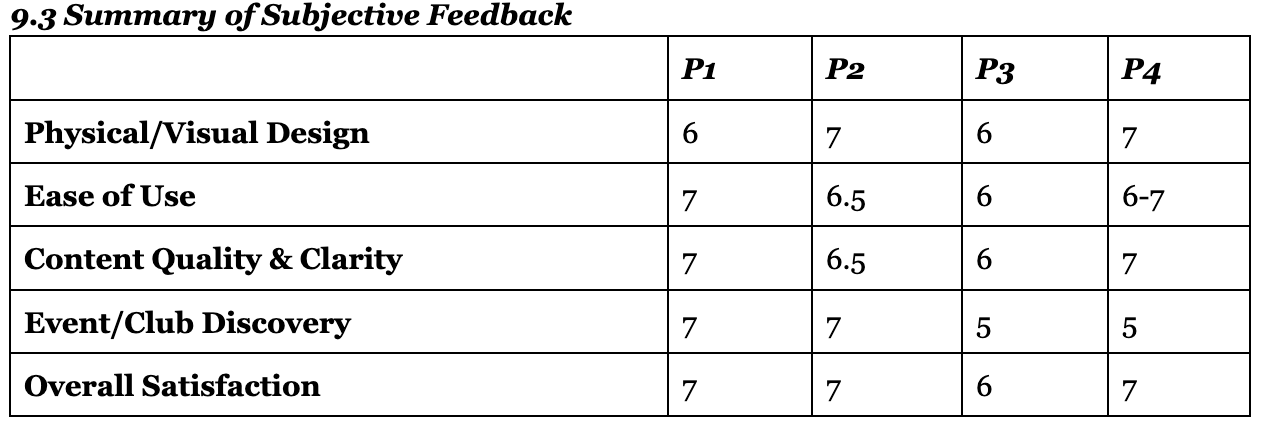
Participants rated the app highly across all dimensions (6–7 out of 7 on average), describing it as clean and intuitive, and were consistently surprised and pleased by the ability to host their own events
Reflection
Leading usability testing and risk analysis for this project reinforced how much design intent can diverge from user interpretation. Participants consistently read the PIN check-in as a security measure rather than an attendance confirmation, and expected the hosting punch card to function as an event history log rather than a reward tracker — neither of which reflected how the features were designed to work. Root-causing those gaps, rather than treating them as one-off confusion, shaped concrete next steps: a QR-based check-in flow, an event history log, and clearer labeling throughout.
Conducting the underlying interviews also sharpened my ability to translate qualitative research into design direction. Twelve semi-structured interviews surfaced a central tension — that meeting someone new was rarely the hard part, but sustaining that connection without the built-in structure of school or shared housing was — and that insight drove decisions like organizing the app around recurring communities rather than individual profiles. Working through both phases within a four-person team reinforced how iterative testing and stakeholder feedback are what actually make a product approachable, not just the initial design intent.